
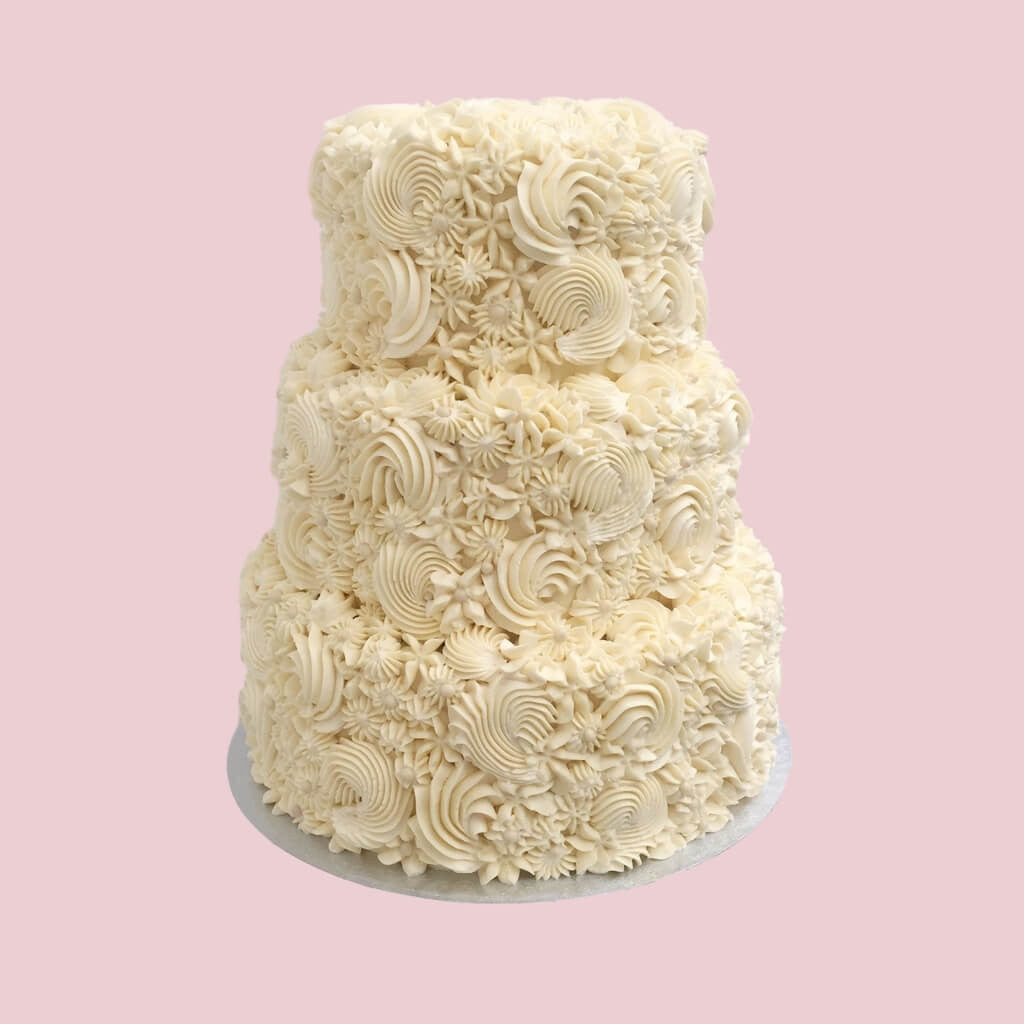
A wedding cake should be one of the enjoyable parts of planning, not another source of invented rules. The useful decisions are practical: how many people it needs to serve, what you actually like eating, the style of the day, the venue conditions and how the cake will get there safely.
Do: decide what matters before contacting a baker
You do not need a finished design, but it helps to know the date, venue, approximate guest count, rough budget and whether you prefer something restrained, colourful, floral, playful or completely bespoke.
Reference images are useful for communicating mood and detail. They should be treated as inspiration rather than an instruction to copy another cake maker's work.
Do: ask about availability early
Wedding-cake capacity varies by bakery, season and complexity. There is no universal rule that every cake must be booked six months or a year ahead, but popular dates and involved designs can fill early. Once the venue and date are firm, ask the baker what lead time applies to your brief.
Do: choose the cake for yourselves
You cannot optimise one cake for every guest's favourite flavour and design style. Pick something you both want to eat and are happy to see in the photographs.
Do: match the design route to the amount of change
A name, date or short message is Personalisation. Material changes to an existing design, such as colours, characters or decorative details, belong under Custom Cakes. A new cake developed from a blank page around the wedding, venue and brief is Bespoke.
Do: plan the cake table and cutting time
Decide where the cake will stand, who is responsible for the table and when it will be cut. The surface needs to be level and stable, away from direct sun, radiators, speakers and heavy foot traffic. If the cake contains perishable fillings, confirm appropriate storage with the venue.
Do: make sure somebody saves you a slice
Couples can spend the whole reception talking to people and miss their own cake. Ask the caterer or venue to put aside a couple of portions before the rest disappears.
Don't: sacrifice flavour for appearance
A wedding cake is still food. Ask what the sponge, filling and frosting actually are, and choose a baker whose style you like and whose cake you want to eat.
Don't: ignore structural or weather advice
Tall cakes, warm marquees, long journeys and delicate decorations change what is practical. A professional baker may suggest a different finish, support method or setup plan because they are thinking about the cake that needs to arrive intact, not only the sketch.
Don't: assume DIY is automatically cheaper or easier
Making your own wedding cake can be lovely if baking is genuinely part of the celebration and you have tested the recipe, storage, transport and setup. It is a poor bargain if the plan depends on learning tiered-cake construction at midnight the day before the wedding.
Don't: forget transport and handover
A finished tiered cake is a fragile load. If you are transporting it yourself, read our wedding-cake transport guide. If a baker is delivering, confirm the arrival window, venue access and the person who will accept the cake.
Don't: let an old blog post dictate current options
Flavours, designs, pricing and service details change. Use the live product and collection pages for the options available now rather than relying on a photograph or sentence published years ago.
For our current designs, browse Wedding Cakes, made to order in our London kitchen and delivered across London and Surrey by our own drivers.


Comments