Forget the Flowers! Why Britons Are Ditching Roses for Instagrammable Sponge Cakes This Valentine’s Day
We spent a staggering £962 million on Valentine’s Day last year — and that figure isn't dipping as we head into 2026.
But forget the roses, the lingerie and the eye-watering restaurant bills. This year, the real object of desire is cake.
Pink cake. Heart-shaped cake. Retro, over-piped cake. Smash-it-with-a-knife cake.
From supermarket aisles to TikTok feeds, Britain has quietly decided that if you’re going to celebrate love, you might as well eat it.
And the numbers show it isn’t slowing down.
NielsenIQ data tracking recent Valentine’s seasons shows food sales rising year on year, with cakes and baked goods continuing to lead the charge. While flowers fade and chocolates vanish in a day, sponge cake has become the safest bet of modern romance — particularly visually bold designs like heart-shaped cakes finished in unapologetic pink.
So why does your phone feel full of buttercream — and why is everyone buying one?
The Instagram Effect: If You Didn’t Post the Cake, Did Valentine’s Even Happen?

Scroll Instagram or TikTok this February and the pattern is impossible to miss.
Bright pink sponges. Red icing piped into hearts. Jam oozing out of vintage layers. Cakes so elaborate they look like props from a film set.
This is the Instagram Effect — now fully baked into Valentine’s Day culture.
A box of chocolates looks dull on a feed. A bunch of roses looks exactly like last year’s bunch of roses.
But a heart-shaped cake with retro piping? That stops the scroll — especially the sort of over-piped revival styles seen in designs like the Pastel Paris Heart Cake.
One novelty cake piped to resemble an ice-cream cone recently racked up more than 12 million views on Instagram, proving that cake isn’t just dessert anymore — it’s content.
Younger shoppers are leading the charge. YouGov research shows 20 per cent of UK women now look to Instagram for Valentine’s inspiration, while nearly a third of Gen Z scroll TikTok to decide what to buy.
If it looks good on your feed, it suddenly feels essential.
“We’re Selling Out Every Day” — Bakers Say Demand Hasn’t Slowed
For bakery owners, Valentine’s in 2026 is less romantic and more relentless.
“We’re selling out daily — especially in London. Heart cakes, break-up cakes, Valentine’s cakes — we can’t keep up,” says one independent baker.

She estimates demand for Valentine’s cakes is up by around 20–25 per cent this year in the run-up to Valentine’s Day.
“It used to be flowers and chocolates. Now people want something they can show off and eat.”
Big chains are seeing the same shift. The UK’s largest celebration-cake retailer reported a 19 per cent jump in online sales after leaning harder into social media and delivery.
Independent bakeries — particularly those offering delivery-led models and seasonal ranges like Valentine’s Day cakes — report similar surges.
Cake has gone digital — and business is booming.
It’s Not Just for Lovers — Women Are Buying Cake for Themselves

Valentine’s Day isn’t just about couples anymore.
Welcome to Galentine’s, Palentine’s — and straight-up Self-Valentine’s.
Retail data suggests around 12 per cent of Britons now buy Valentine’s treats for friends rather than partners, and that number is still climbing in 2026.
Cake fits the mood perfectly.
“It’s women buying for their friends, their mums — and themselves,” says Sarah. “No one feels awkward buying cake.”
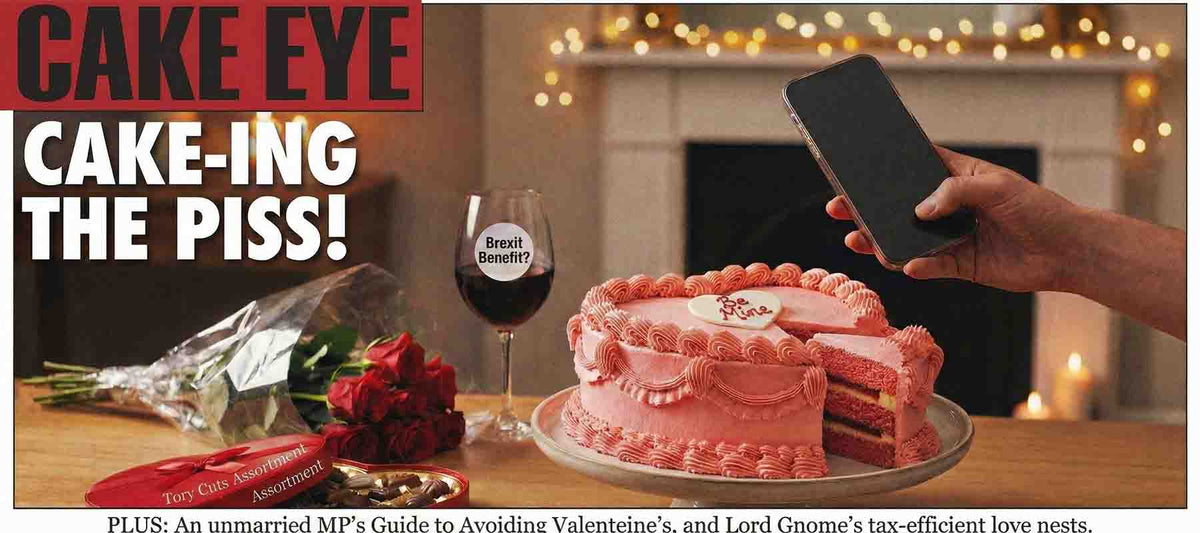
TikTok has even normalised the anti-Valentine mood. The viral ‘stab cake’ trend — heart-shaped cakes theatrically attacked with knives — has become a tongue-in-cheek symbol of break-ups, bitterness and independence, embodied neatly by cakes like the Burn Away Break-Up Cake.
Single? Furious at your ex? Slightly done with men? There’s a cake for that.
Cake Lasts Longer Than Flowers — And Feels Like Better Value

There’s another reason cake keeps winning: money.
With household budgets still under pressure in 2026, many couples are quietly ditching the big night out.
A Valentine’s dinner for two can easily top £200 once drinks are included. A decorated cake delivered? Often £90-£100.
It feeds more people. It lasts longer. And it won’t be limp by Tuesday morning.
YouGov polling shows food and drink gifts now rival flowers as the most popular Valentine’s present — and cake feels like the smartest choice of all, especially rich crowd-pleasers like the Chocolate Guinness Cake.
Cake Is Comfort Food — And Valentine’s Can Be Brutal
Valentine’s Day isn’t all hearts and champagne.
For some, it’s lonely. For others, awkward. For many, financially stressful.
Psychologists have long noted that when people feel under pressure, they reach for sugar.
A Waitrose survey found 65 per cent of Britons see sharing food as a way of showing love — and nearly one in three admit they’ve used food to smooth over an argument.
When asked what works best? Chocolate cake topped the list — indulgent, nostalgic, and deeply familiar.
Online Ordering Has Made Cake the Ultimate Lazy-Romantic Gesture
Another reason cake dominates Valentine’s Day in 2026: it’s effortless.
Post-pandemic habits are now permanent. The Craft Bakers Association found 31 per cent of consumers still order food online, with home delivery fully normalised.
That means you can arrange a Valentine’s cake in minutes.
No reservations. No taxis. No awkward small talk with the table next to you.
Just click, deliver, eat — whether it’s a dramatic centrepiece or something softly romantic from the heart cakes collection.
Why Cake Has Taken Over Valentine’s Day
Put it all together and the obsession makes sense.
Cake is:
Instagrammable
Affordable
Comforting
Easy to order
Easy to share
Suitable for couples, friends or solo celebrations
Flowers are lovely — but passive.
Cake is an event.
You cut it. You share it. You photograph it. You talk about it.
And in a world where Valentine’s Day is as much about what you post as what you feel, cake wins every time.
So if your feed is wall-to-wall pink sponge this February, don’t be surprised.
Britain has made its choice.
In 2026, love isn’t wrapped in cellophane.
It’s iced, sliced — and eaten.
Leave a comment (all fields required)