





[Updated 12/07/2026]
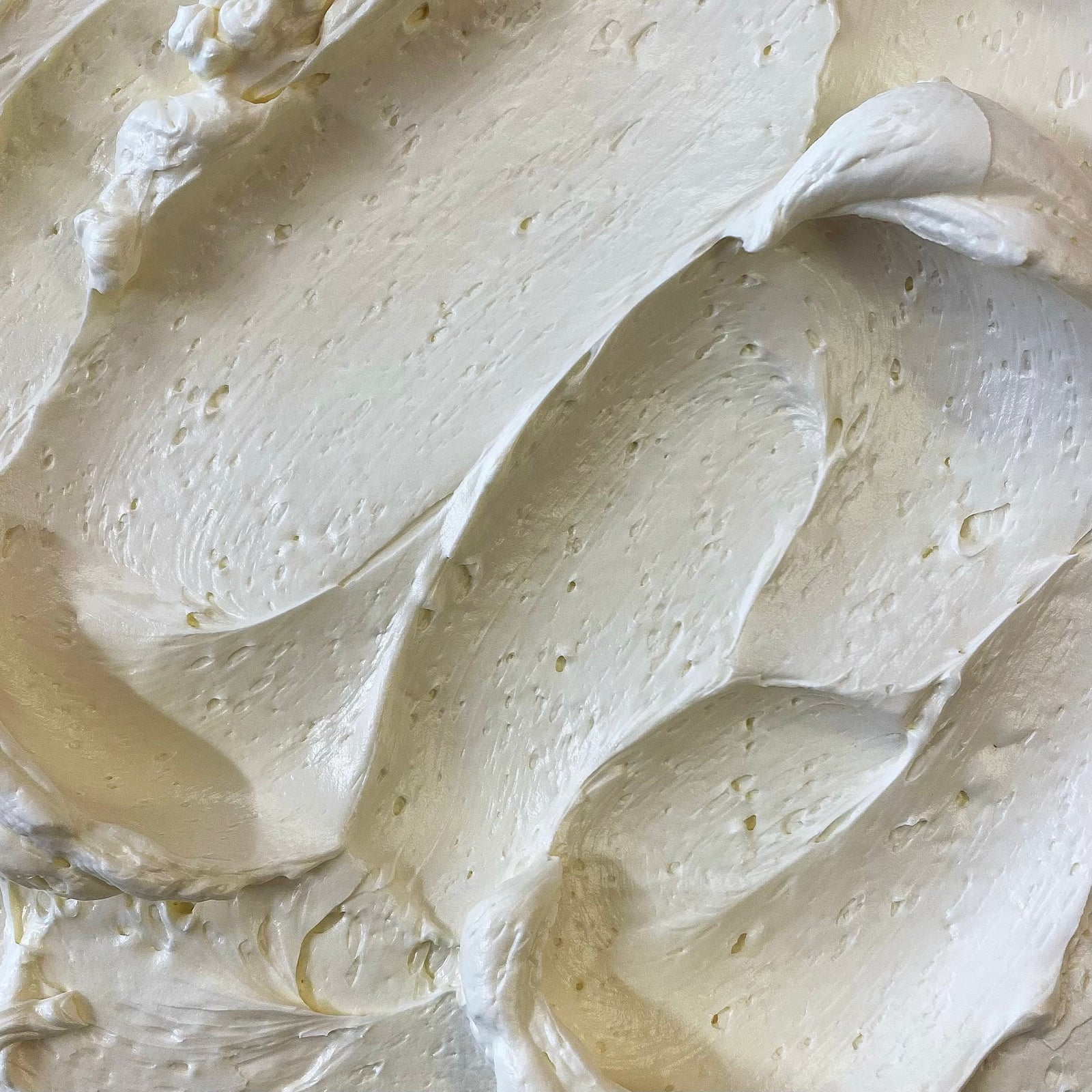
Swiss meringue buttercream is smooth, light and less sweet than a conventional icing-sugar buttercream. It takes a little more care than a simple frosting, but the method is straightforward once the temperatures are controlled properly.
What Is Swiss Meringue Buttercream?
Swiss meringue buttercream is made by heating pasteurised egg whites with granulated sugar, whisking the mixture into a glossy meringue and then gradually beating in softened butter. It is suitable for filling, covering and piping cakes, cupcakes, macarons and choux pastry.
Ingredients
This quantity is enough for one 6-inch layer cake or approximately 12 cupcakes.
- 150g pasteurised egg whites, at room temperature
- 225g granulated sugar
- 300g unsalted butter, softened but not greasy
- 1 teaspoon vanilla extract
- A pinch of salt
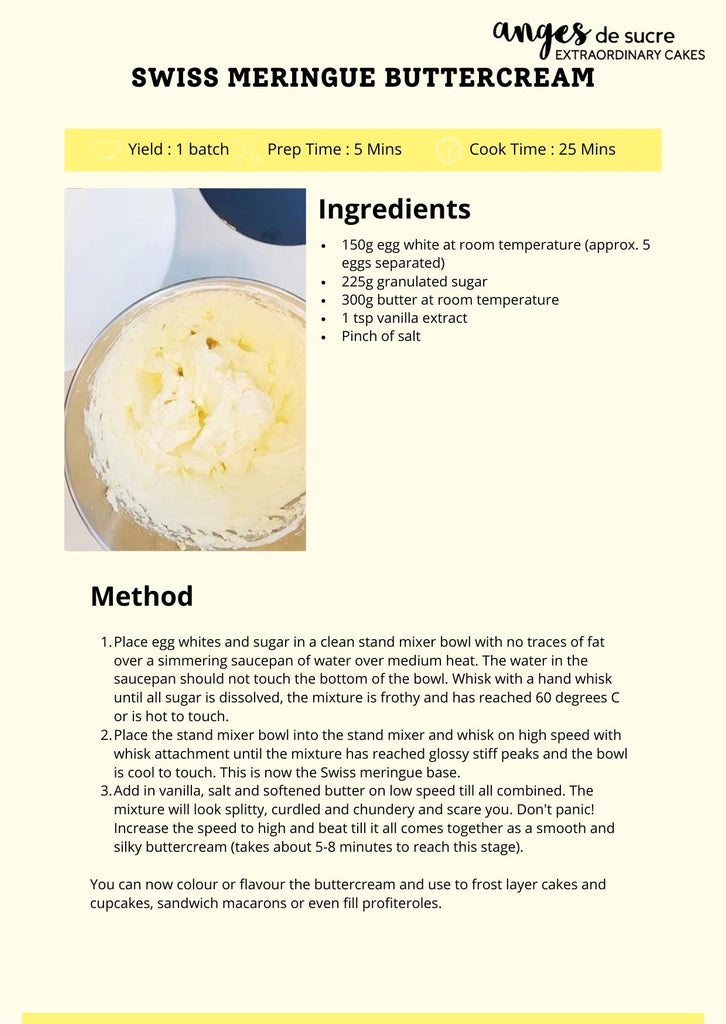
Method
1) Place the pasteurised egg whites and granulated sugar in a thoroughly clean heatproof mixer bowl. Set the bowl over a saucepan of gently simmering water, making sure the water does not touch its base.
Whisk continuously until the sugar has dissolved and a reliable food thermometer reads 71°C. Do not use touch as a substitute for checking the temperature.

2) Transfer the bowl to the stand mixer and whisk on high speed until the meringue forms glossy peaks and the bowl has cooled. This is the Swiss meringue base.

3) Reduce the mixer to low speed. Add the vanilla, salt and softened butter gradually, allowing each addition to combine before adding more.

The mixture may look curdled or loose partway through. Continue beating on high speed for approximately 5 to 8 minutes until it becomes smooth and silky.

4) Use the buttercream immediately, or refrigerate it promptly in a clean covered container. Before using chilled buttercream, allow it to soften to a workable temperature and rewhip until smooth. Follow the storage guidance supplied with the full recipe and do not rely on the old claim that it keeps for several weeks.

Troubleshooting
- Looks soupy? The mixture may be too warm. Chill the bowl briefly, then whisk again.
- Too stiff? Warm a small portion gently, add it back to the bowl and rewhip.
- Still curdled? Continue whisking. A temperature imbalance often resolves as the mixture comes together.
The buttercream can be flavoured with cocoa, fruit purée, caramel, citrus or another suitable ingredient once it is smooth.
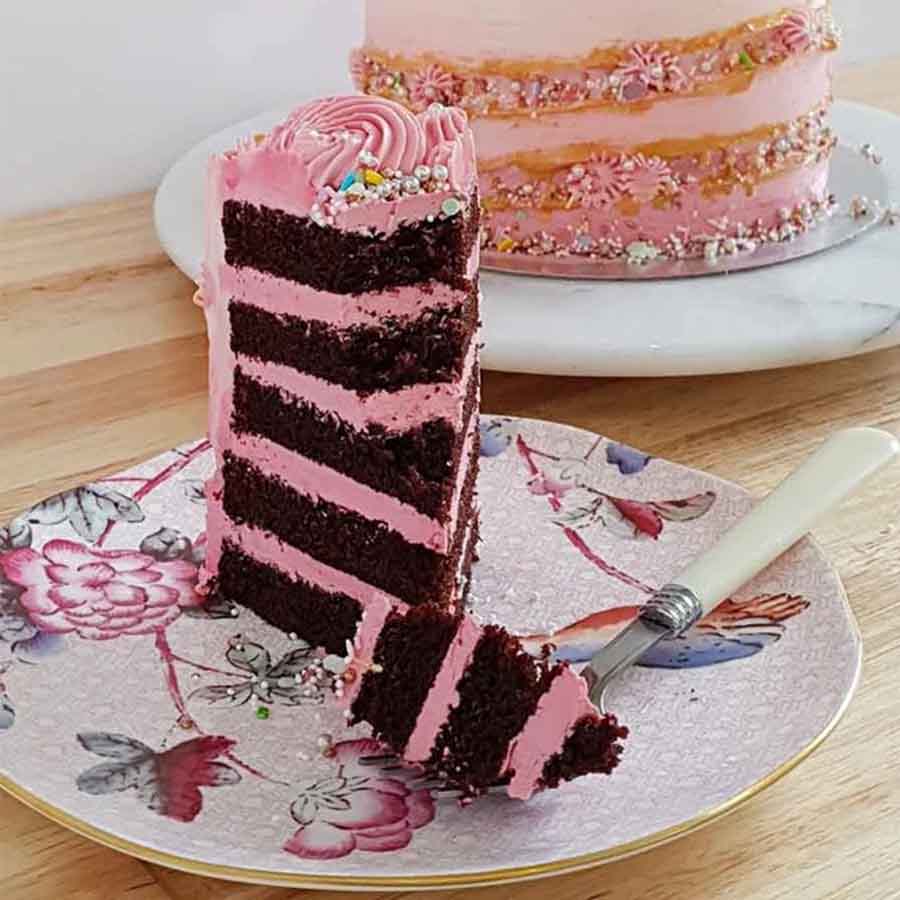
Browse our birthday cakes for decoration ideas or see the full Swiss meringue buttercream guide.
Lots of love,
Reshmi xoxo





Karen McVey
July 26, 2023
Hi just wondering when adding the butter do you change the attachment from whisk to paddle, just I found the whisk got very gunked up with butter and had to keep stopping it to clear? Thanks