
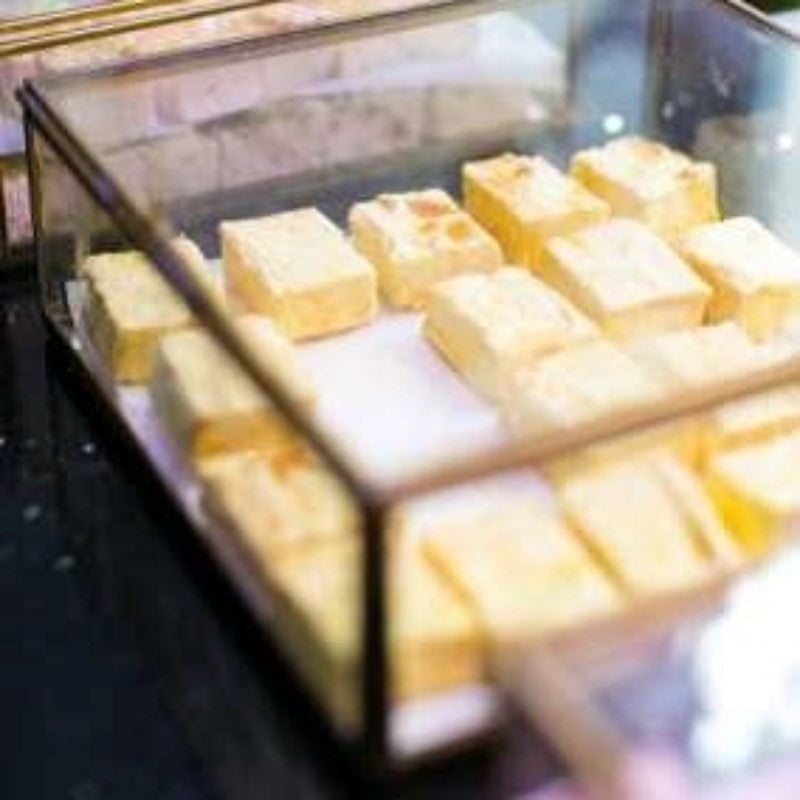
These pineapple, mango and coconut marshmallows are a tropical variation on our basic marshmallow recipe. The important bit is the pineapple: fresh pineapple contains bromelain, an enzyme that can stop gelatine setting properly unless the fruit is heated first. Canned pineapple has already been heat-treated, so it is the easier option.
Pineapple Marshmallow Recipe
Ingredients
- 1 batch of our basic marshmallow recipe
- 120ml canned pineapple purée, or fresh pineapple purée that has been boiled and then cooled completely
- 1 ripe mango, puréed
- 1 tablespoon granulated sugar
- 2 tablespoons desiccated coconut
Method
- If using fresh pineapple, bring the purée to a proper boil, then cool it completely before using it to bloom the gelatine. Do not add raw fresh pineapple directly to the gelatine mixture.
- Follow the basic marshmallow method, using the cooled pineapple purée in place of the blooming liquid.
- Put the mango purée and sugar into a small saucepan. Cook gently until slightly thickened, then cool completely.
- Pour the finished pineapple marshmallow into the prepared tin. Dot small spoonfuls of the cooled mango mixture over the top and drag a skewer or the back of a spoon through it lightly to create a ripple. Avoid mixing in so much wet fruit that the marshmallow loses structure.
- Sprinkle with desiccated coconut and leave to set fully before cutting and dusting.
Storage
This fruit-purée variation has not been validated for room-temperature shelf life. Keep the finished marshmallows covered in the refrigerator rather than treating them as a long-storage sweet, and make a modest batch. Chilling can change the texture or create some surface condensation, so make only what you need and keep handling clean and minimal.
For more tested recipes and technique guides, browse our Recipes & Baking Guides.





Comments