





Baking Science · Cake Making
Baking Powder Vs Baking Soda, Without The Chemistry Panic
Baking powder and baking soda both help cakes rise, but they are not the same thing. Use the wrong one, or use too much, and your sponge can end up flat, bitter, metallic-tasting or oddly coloured. Lovely.
This guide explains the difference in plain English: what baking powder does, what baking soda does, when to use each one, and how to stop your cake from turning into a scientific disappointment.
Baking soda needs acid to work. Baking powder already contains acid, so it works in more neutral cake recipes. If a recipe includes yoghurt, buttermilk, lemon, brown sugar or another acidic ingredient, baking soda may be used. If not, baking powder is usually the safer cake-making choice.
- Best For Understanding cake rise, sponge texture and flavour balance
- Skill Level Beginner-friendly, but useful for serious bakers too
- Time Required 5 minutes to read, and potentially save yourself a sad, flat sponge

Choosing Between Baking Powder And Baking Soda
Baking soda is powerful, but it needs acid. Pair it with ingredients such as lemon juice, brown sugar, buttermilk, yoghurt or cocoa and it reacts by producing carbon dioxide. That gas is what lifts the batter and gives your cake its rise.
Without enough acid, baking soda has nothing useful to react with. The result can be a lacklustre sponge and a metallic taste that no amount of buttercream can politely disguise.
- The Recipe Has Acid Think lemon, yoghurt, buttermilk, brown sugar or cocoa.
- You Need Strong Lift Baking soda is more powerful than baking powder.
- The Flavour Can Handle It Carrot cake, chocolate cake and spiced cakes often suit it beautifully.
Baking soda shines in cake recipes like carrot cake, where acidity and spice can balance its strength. You can see that in our favourite carrot cake recipe.

Baking powder is more versatile because it already contains baking soda and an acid, usually cream of tartar, with cornflour added to help keep the mixture stable. This means it can create lift without needing a strongly acidic ingredient in the recipe.
- The Recipe Is Neutral Vanilla sponge, plain cakes and many biscuits usually rely on baking powder.
- You Want Controlled Rise It is gentler than baking soda and easier to manage.
- You Want A Cleaner Flavour It is less likely to leave a metallic aftertaste when measured correctly.
Baking soda also has a life beyond cake. It is used as a cleaner, teeth whitener and drain unclogger, which is useful if you have some leftovers, though perhaps not the most appetising thought while making sponge.
The Quick Comparison
Baking Powder
Contains: Baking soda plus acid.
Needs: Moisture and heat.
Best for: Sponge cakes, biscuits, cookies and recipes without much natural acidity.
Risk: Too much can taste bitter or chemical.
Baking Soda
Contains: Sodium bicarbonate only.
Needs: Acid and moisture.
Best for: Carrot cake, chocolate cake, buttermilk bakes and recipes with lemon or yoghurt.
Risk: Too much can taste metallic and leave an unpleasant aftertaste.
How Baking Powder Works
Baking powder is a little double act. The first reaction begins when it meets moisture, usually as you add eggs, milk or other liquids to the dry ingredients. The second reaction happens in the oven, when heat gives the batter its final lift.
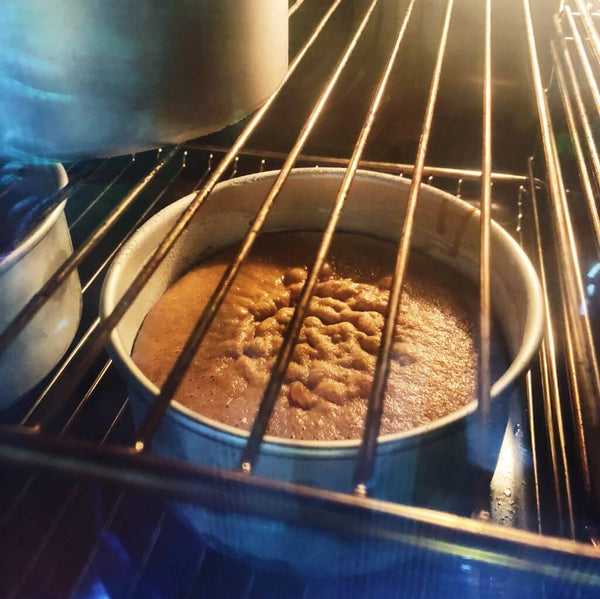
That is why cake batter should not sit around for too long once mixed. The raising agents have already started working, and they are not waiting patiently while you answer emails, find the tin liner or wonder where the spatula has gone.
Once baking powder or baking soda is mixed with wet ingredients, get the cake into the oven promptly. The reaction has started, and the best rise happens when the batter is baked without delay.
When To Use Both Together
Some recipes use both baking powder and baking soda. This is not the recipe being dramatic. It usually means the baker needs more than one kind of lift, or wants to balance rise, flavour, browning and acidity.
For a lemon drizzle cake or sticky toffee pudding, baking powder is often the better starting point because it gives a controlled rise without swallowing up too much of the acidity that makes the flavour sing.
Baking soda can add extra lift when a recipe needs more push, but it has to be measured carefully. Too much can change the taste and colour of the bake. This is why recipes should be followed closely, especially when the raising agents are doing delicate chemistry in the background.
- Baking Powder Gives a steady, controlled rise.
- Baking Soda Gives stronger lift when acid is present.
- Both Together Can balance rise, colour, flavour and texture when used correctly.
If all this talk of the perfect rise and zingy citrus has you craving a treat, our lemon cake delivery in London and Surrey is as good as homemade, perhaps even better. Or, if you'd rather skip the washing up entirely, you can always browse cake delivery in London and let us do the lifting for you.
How Much Baking Powder To Use With Plain Flour
Baking powder is often used to make homemade self-raising flour. This is useful if you have plain flour in the cupboard and a cake craving that will not wait.
Basic Rule For every 110g of plain flour, add one teaspoon of baking powder.
Mix it thoroughly through the flour before adding wet ingredients. Uneven mixing can mean uneven rise, which is how you end up with one side of a cake looking smug and the other looking defeated.
Substituting Baking Powder With Baking Soda
Baking soda is much stronger than baking powder, so you cannot swap them spoon-for-spoon. As a general guide, use around ¼ of the amount of baking soda compared with the baking powder required.
If a recipe asks for 1 teaspoon of baking powder, you would usually need about ¼ teaspoon of baking soda, plus enough acid in the recipe to activate it.
Remember to mix baking soda with the dry ingredients first. Once liquid is introduced, the reaction starts, and from that point onwards the clock is ticking.

How To Test Baking Powder Freshness
Before using that long-neglected canister of baking powder from the back of the cupboard, test whether it still has any life in it. Raising agents lose power over time, especially if they have been exposed to moisture.
Store baking powder and baking soda in sealed, airtight containers in a cool, dry place. Humidity is the enemy. So is the mysterious cupboard dust that seems to appear from nowhere.
Freshness Test Add ¼ teaspoon of baking powder or baking soda to 1 tablespoon of vinegar. If it fizzes strongly, it is still active.
The greater the fizz and bubbles, the fresher the raising agent. If the reaction is sad and sleepy, your cake probably will be too.
The Final Cake-Making Rule
Use baking powder when you want reliable lift in a fairly neutral cake. Use baking soda when the recipe contains enough acid to activate it. Use both only when the recipe asks for both, because that usually means the balance has already been worked out for you.
Baking powder is the steady all-rounder. Baking soda is the powerful one that needs acid. Measure both carefully, mix evenly, bake promptly, and your sponge has a much better chance of behaving itself.
And if you’ve got a celebration on the horizon, consider this your gentle nudge: getting the baking powder vs baking soda choice right is one of the easiest ways to guarantee a properly risen cake. If you'd rather have the perfect lift without thinking about chemistry at all, pop over to our cake collection.









Leave a comment (all fields required)