





Macarons · Patisserie Notes
Macaron, Macaroon, And Other Ways To Start A Patisserie Argument
Over the years I’ve heard Rush-mee, Resh-mee, and, the pièce de résistance, Rash-mee, a pronunciation that sounds more like a medical condition than a daughter. Unless you’re from the Indian subcontinent, you simply would not think to say Ray-shmee.
Eventually, I stopped correcting people. Life is too short, and frankly, if someone is offering me macarons, they can call me whatever they want.
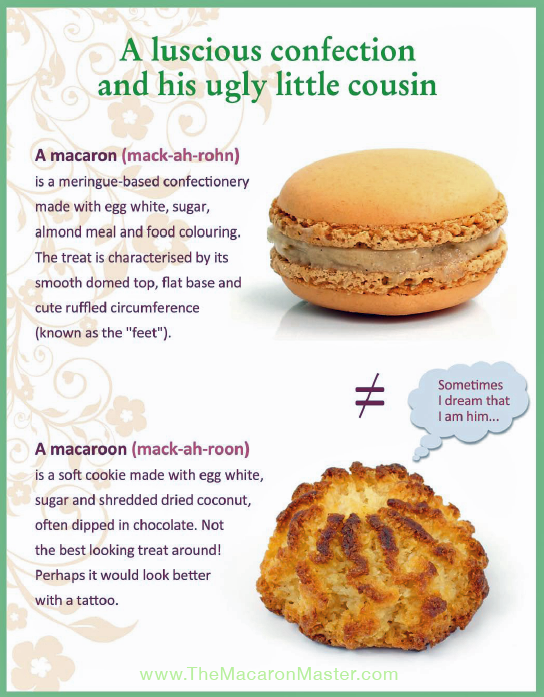
A macaron is the French almond meringue sandwich with a smooth shell, soft centre and buttercream or ganache filling. A macaroon is usually a coconut-based bake. They sound similar, but they are very different little creatures.

Macaron Vs Macaroon
You know what is even more butchered than my name? Macaron. I first discovered them in France while studying patisserie, so I say “mac-a-ron”. In the UK, call them “mac-a-roons” and everyone nods along, blissfully unaware that one involves almond meringue and the other involves desiccated coconut and the texture of damp sand.
A macaron cake would be exquisite. A coconut macaroon cake would be... a health and safety incident.
- Macaron French almond meringue shells, usually filled with buttercream, ganache or curd.
- Macaroon Often coconut-based, denser, chewier and much more rustic.
- The Confusion Similar spelling, similar history, very different eating experience.
Here’s a comparison diagram I stumbled across on I Do Believe I Came With a Hat:

And another, courtesy of The Macaron Master:
The Bakery Peace Treaty
Since launching Anges de Sucre, another name everyone pronounces differently, we are consistent like that, I’ve relaxed. Call them macarons, call them macaroons, call them French fancy sandwich things. I promise I will not clutch my pearls.
After all, language evolves, and if the entire world calls them macaroons, who am I to start a revolution? Although, between us, “mac-a-ron” does make you sound like you know your way around a proper birthday cake.
Still, I draw the line at “mac-a-runs”. My co-director vetoed it instantly, apparently it sounds like I’m selling baked goods that cause gastrointestinal distress. We’ve settled on “French macaroon” as a peace-treaty phrase, easily understood and sufficiently correct to keep the purists from forming an angry buttercream-wielding mob.
Say macaron if you want to be technically correct. Say French macaroon if you want everyone in Britain to understand what you mean. Say mac-a-run and we may need a quiet word.

Names Matter, But Flavour Matters More
Whether you’re a macaron purist or a macaroon enthusiast, you’re in very safe hands here. And if your heart genuinely lies in something show-stopping, towering, or unashamedly outrageous, our luxury cakes and wedding cakes are what we’re actually famous for across London and Surrey.
Yes, even more than the great Macaron vs Macaroon debate.
Make Them Yourself
Now that we’ve cleared up the world’s most unnecessary pronunciation war, here’s the fun part: make them yourself. Truly. You can absolutely do it. Macarons have a reputation for being moody little divas, but with the right method, they are far less terrifying than the internet would have you believe.
Our Hero Fool-Proof Macaron Recipe was created to take away the guesswork. It shows you how to make the shells, understand the texture, avoid the common disasters and finally get those glossy, delicate little beauties behaving themselves.
- For Beginners A clear method that takes the fear out of macarons.
- For Home Bakers Proper patisserie guidance without the drama.
- For Show-Offs The kindest possible route to neat shells, pretty feet and smug satisfaction.
If you have ever wanted to make proper French macarons at home, this is the recipe to begin with. Fool-proof, bakery-tested and far less scary than it looks.
Try The Fool-Proof Macaron RecipeLove,
Reshmi xoxo




Gemma
November 21, 2025
I live in the UK, and macarons are not called macaroons here. Macarons are macarons, macaroons are macaroons. They’re not interchangeable at all 🤦♀️