
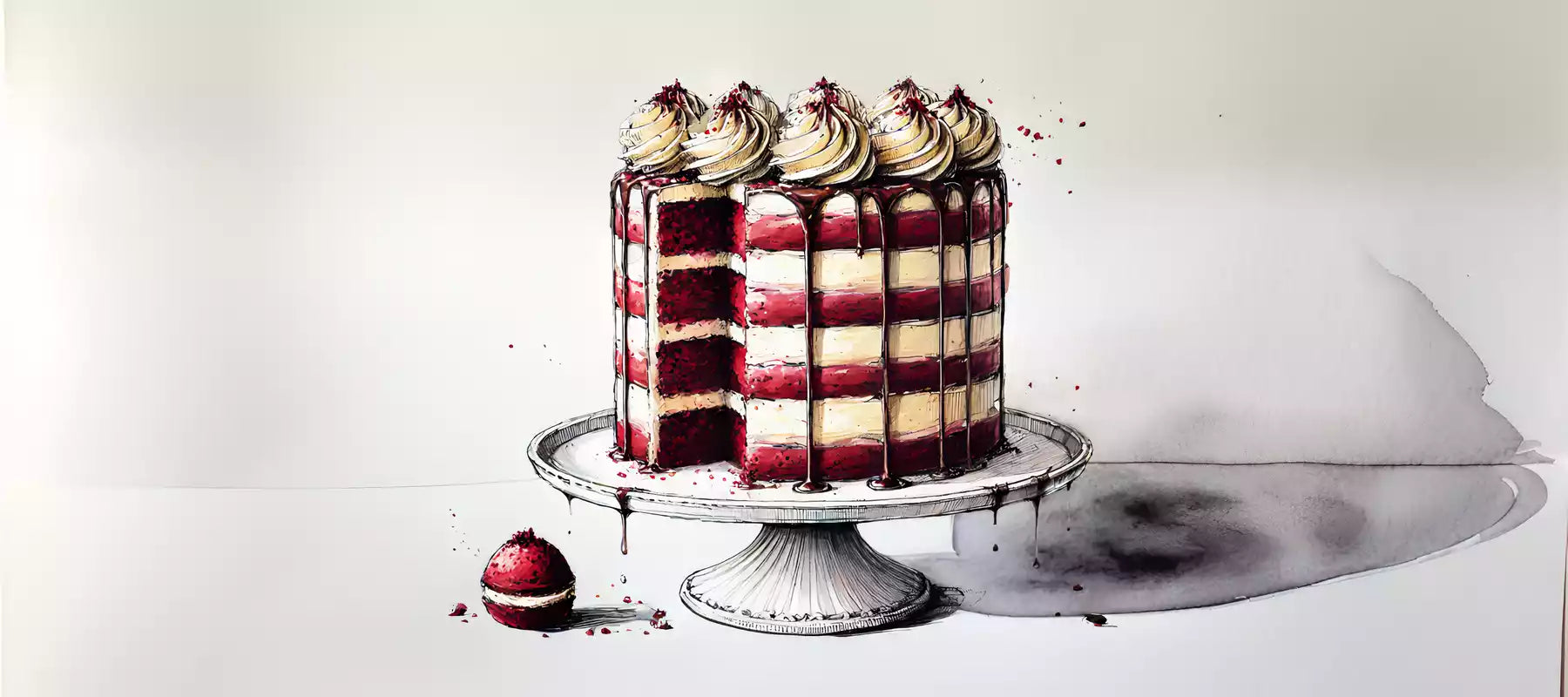
I used to roll my eyes at red velvet cake. It seemed more style than substance: vivid red sponge, a lot of frosting and a flavour nobody could quite define. Then I ate a properly made one and changed my mind.
What Is Red Velvet Cake?
Red velvet is a lightly cocoa-flavoured cake with a soft, fine crumb, gentle acidity and a distinctive red colour. It sits somewhere between vanilla and chocolate. Cocoa should be present but restrained; buttermilk, vinegar or another acidic ingredient can add tang and, where bicarbonate of soda is used, take part in the raising chemistry. Modern bright-red versions usually rely on food colouring.

Where Did Red Velvet Cake Come From?
The history is less tidy than many internet summaries suggest. Nineteenth-century “velvet” cakes were named for a fine, soft crumb rather than a red colour. Later cocoa cakes made with natural, non-alkalised cocoa and acidic ingredients could develop a muted reddish-brown tone. That is very different from the bright scarlet associated with modern red velvet.
The vivid version was helped along by commercial food colouring. The Adams Extract Company is an important part of the twentieth-century story: it promoted a red velvet recipe using its food colour, helping popularise the dramatic colour now associated with the cake.
Beetroot has also appeared in historical and modern recipes, but it is too neat to say that beet juice “created” red velvet or that wartime beetroot was the single origin of the modern cake. Different recipes, regions and marketing influences overlapped.
For the same reason, the often-repeated story that acidity alone turns cocoa bright red needs restraint. Natural cocoa can show reddish-brown tones in acidic batters, but modern red velvet's strong scarlet colour generally comes from added colouring.
What Does Red Velvet Taste Like?
A good red velvet should not taste like a full chocolate cake dyed red. Cocoa is a supporting note. Vanilla, butter or oil, gentle acidity and the frosting all matter. The result should be soft, moist and lightly cocoa-flavoured with enough tang to keep the sweetness in check.

Why Do Recipes Use Buttermilk And Vinegar?
They can contribute flavour and acidity. Where bicarbonate of soda is part of the recipe, acid also participates in the leavening reaction. The exact role depends on the formula: vinegar is not there solely for colour, and it is not accurate to treat every red velvet recipe as chemically identical.
What About The Cocoa?
Natural and Dutch-processed cocoa behave differently because Dutch processing reduces cocoa's acidity. That can matter in recipes that rely on a particular acid/alkali balance. Use the cocoa specified by the recipe rather than assuming every cocoa powder is interchangeable.
How Red Should Red Velvet Be?
As red as you want it, frankly, provided the colouring is sold for food use and you follow its instructions. Natural colourings such as beetroot can give attractive burgundy or earthy-red shades, but they do not reliably produce the same vivid scarlet as concentrated food colour and they may affect flavour or texture.
What Frosting Belongs On Red Velvet?
There is no single compulsory answer. Older recipes are associated with cooked ermine-style icing; cream-cheese frosting became an especially popular partner later. We also use less-sweet buttercream styles where they suit the design. The useful test is balance: the frosting should complement the light cocoa and tang rather than bury it in sugar.
Our Red Velvet
For us the point is texture and balance, not simply red dye. We want a tender sponge, restrained cocoa, vanilla and enough acidity to keep the flavour lively.
If you would rather order than bake, browse our red velvet cakes, or see the Meta Red Velvet Cake for current availability.
Lots of love,
Reshmi xoxo



Comments