
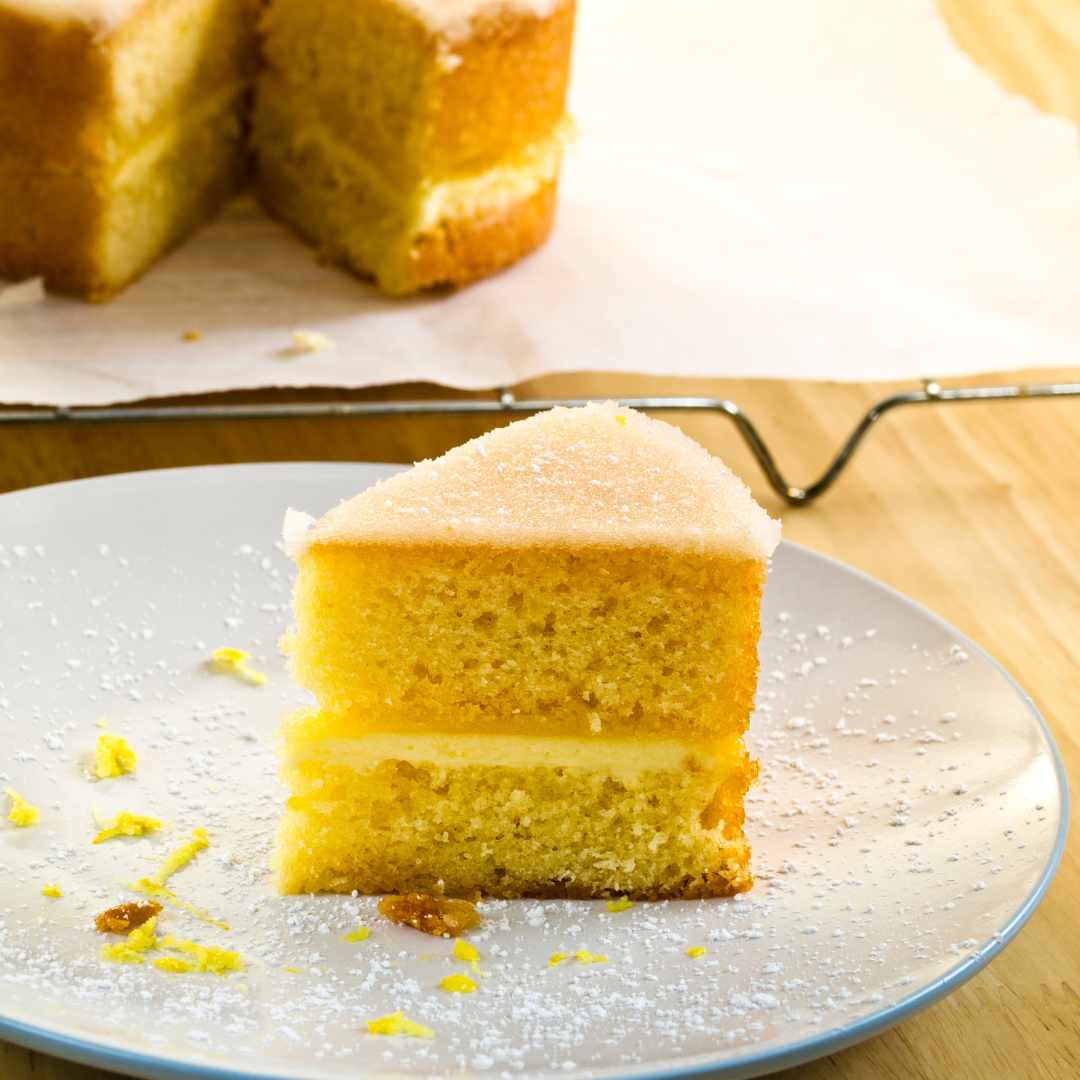
Lemon drizzle is one of those cakes that feels completely at home beside a kettle: simple sponge, fresh citrus and a syrup or sugar topping added while the cake is still warm. It is bright enough to feel special and uncomplicated enough to bake without inventing an occasion.
Looking to order rather than bake? See our Lemon Drizzle Cake, a tiered celebration cake made to order for London and Surrey delivery.
That combination helps explain why it has become such a familiar part of British home baking. It does not need a claim to be “Britain's favourite cake” to justify its place in the tin.
What makes lemon drizzle different from lemon sponge?
The defining move is the drizzle. Lemon juice and sugar are added to the warm cake so some of the liquid moves into the crumb while some sugar remains nearer the surface. Depending on the recipe, that can give the cake a moist citrus interior, a fine sugary crust, or both.
Without the drizzle, you have a lemon sponge. Still lovely, but a different cake.
Use the zest as well as the juice
Much of a lemon's aroma is in the peel. Finely grated zest brings fragrant citrus oils to the batter, while the juice provides acidity and sharpness in the syrup or icing.
Use only the coloured outer zest and avoid grating deeply into the white pith, which is far more bitter.
Drizzle the cake while it is warm
A warm sponge absorbs syrup more readily than a completely cold one. Many recipes prick the surface first so the drizzle can move through the cake more evenly.
The exact quantity matters. Too little and the cake loses the characteristic sharp, moist finish; far too much can make the crumb wet and heavy. Follow a tested recipe rather than pouring until the bottle is empty.
Why lemon and butter work so well
Lemon gives acidity and aroma; butter, eggs and sugar give richness and sweetness. The contrast is what keeps the cake lively. Oil-based versions can also be excellent, but they produce a different texture and flavour from a traditional buttery loaf.
Should lemon drizzle have icing?
It can. Some versions finish only with a crunchy lemon-sugar syrup, while others add a thin icing once the cake is cool. The first gives more texture; the second gives a neater visual finish and another hit of sweetness. Neither is compulsory.
Useful variations
- Poppy seed: adds gentle texture without changing the citrus focus.
- Ground almond: makes the crumb richer and denser; use a recipe formulated for it rather than adding an arbitrary handful.
- Orange or lime: can replace some or all of the lemon, but sweetness and acidity change, so adjust the syrup deliberately.
- Cardamom or rosemary: can work in small amounts as aromatic support.
- Gin: works as an adult flavour in a syrup or glaze, but label it clearly and do not assume alcohol automatically disappears because it touches a warm cake.
Is lemon drizzle an easy beginner cake?
It can be, because the decoration is simple and a loaf tin is forgiving. But measurements still matter. Flour, sugar, eggs, fat, raising agent, tin size and baking temperature determine the structure. Lemon drizzle is friendly; it is not immune to physics.
Storage
A plain lemon-drizzle loaf should be cooled completely and kept covered so it does not dry out. Storage changes if you add cream cheese, whipped cream, custard or another perishable filling, in which case refrigeration is required.
From tea loaf to celebration cake
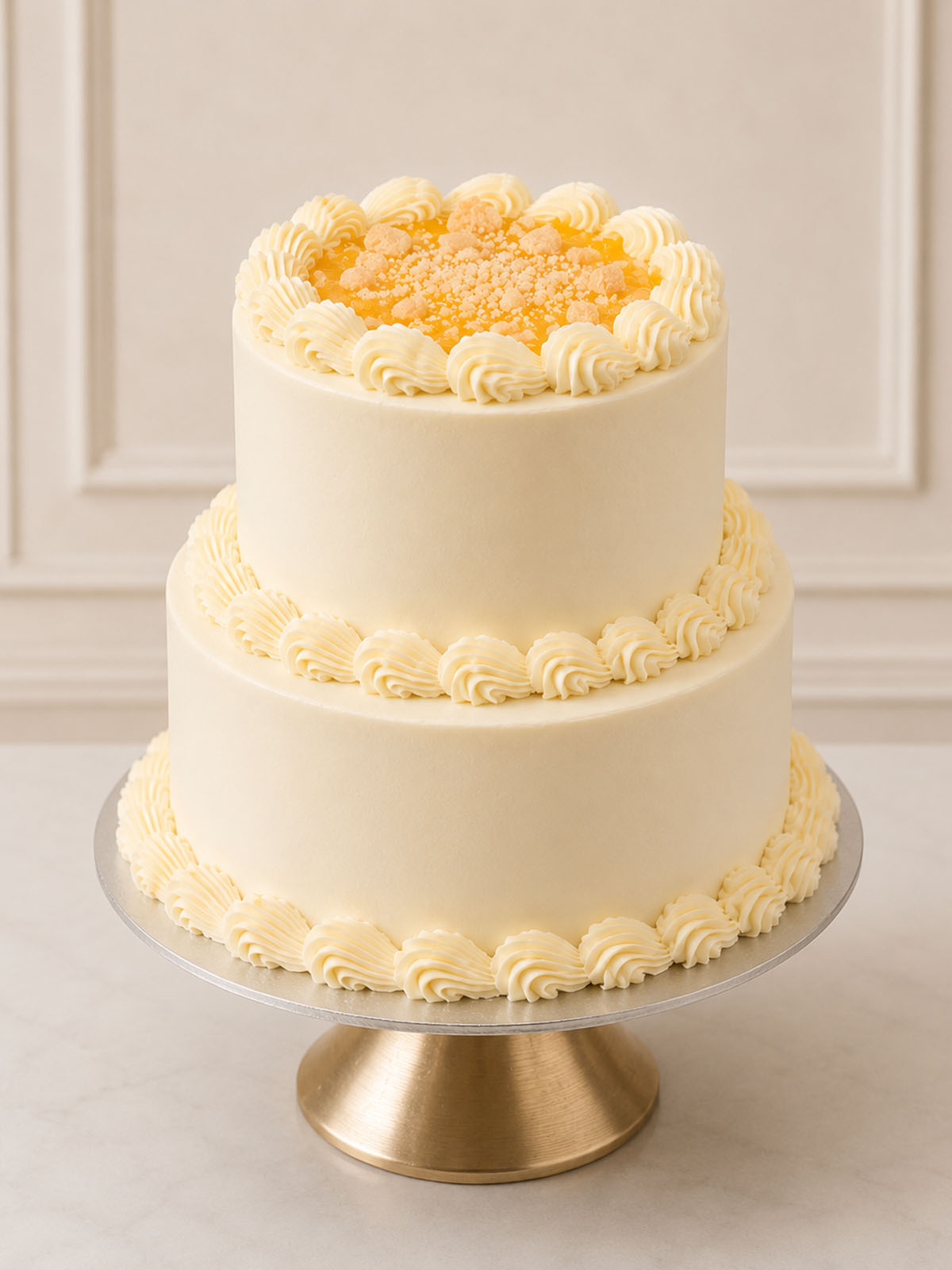
The home-baking version is usually a loaf or simple round cake. For birthdays and other celebrations, the same lemon profile can be built into a layered cake with buttercream, curd or decorative finishes.
For current celebration designs, browse our Lemon Cakes, including our Lemon Drizzle Birthday Cake, made to order and hand-delivered across London and Surrey.


Where is the recipe?