
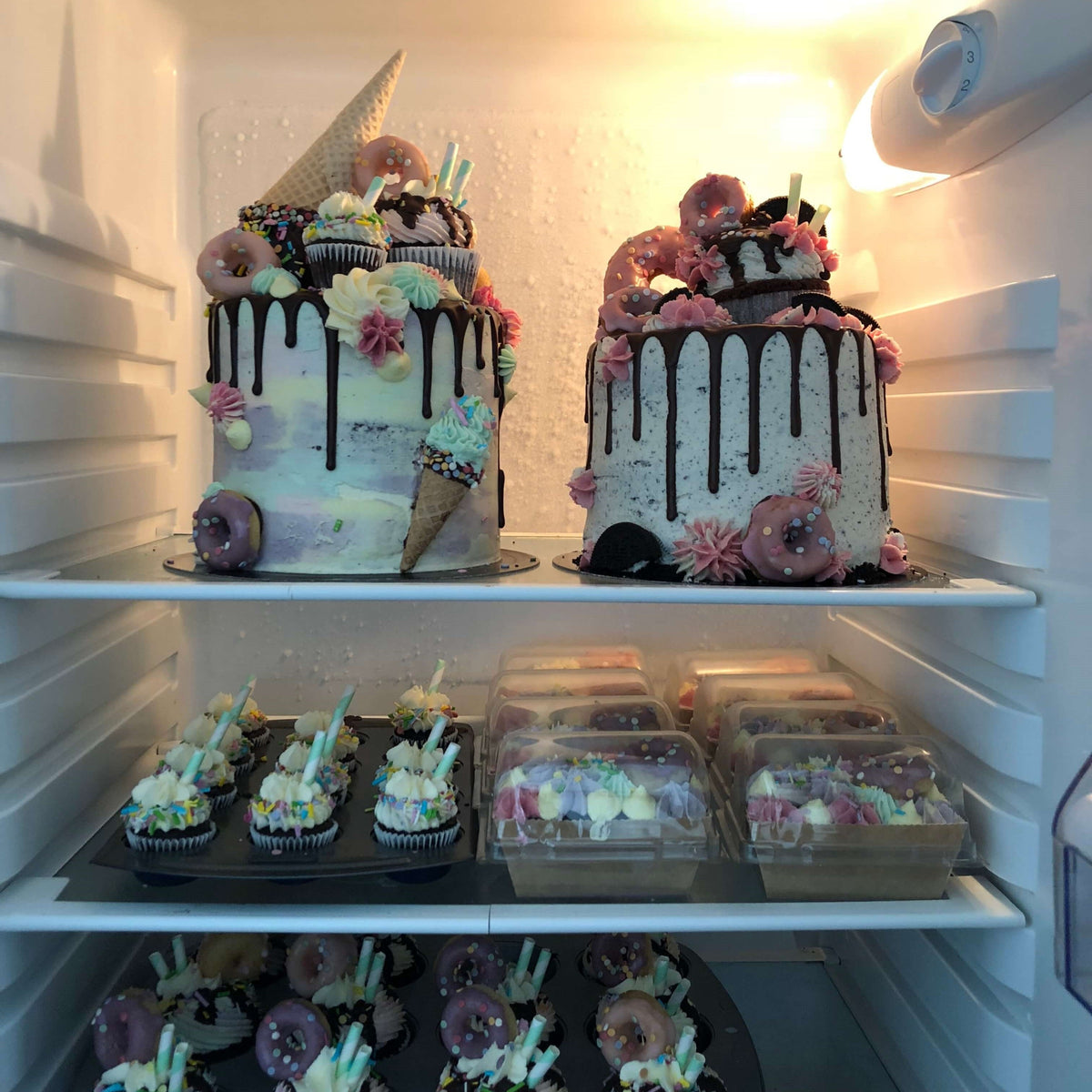
Cake Storage · Food Safety · Serving Quality
Does Cake Need To Be Refrigerated? It Depends On The Cake
There is no safe universal rule that says “cake belongs in the fridge” or “cake should always stay out”. The right storage depends on the recipe, filling, frosting, decoration and the instructions supplied with the particular cake.
The practical rule: follow the storage instructions for the most perishable component. If a cake contains a filling or topping that requires refrigeration, the whole assembled cake needs to be handled accordingly.
Which cakes clearly need refrigeration?
The Food Standards Agency specifically says to keep cheesecakes and cakes or desserts containing fresh cream in the fridge. More generally, foods that require chilled storage should be kept cold and left out for the shortest practical time. The FSA recommends domestic fridges are kept at 5°C or below.
That means cakes containing fresh cream, cheesecake-style fillings, pastry cream, custard, mousse, mascarpone or another filling whose label or tested recipe requires chilling should be refrigerated. If a commercial ingredient carries its own storage instruction, follow it.
Fresh fruit does not automatically make every cake unsafe at room temperature, but cut fruit and fruit used inside a moist cream, custard or dairy filling can change the storage requirements. Follow the tested recipe or maker’s instruction rather than guessing from the word “fruit”.
What about buttercream, ganache and plain sponge?
This is where internet advice becomes too confident. Some buttercream, ganache and sponge formulas can be designed for ambient storage; others cannot. Sugar and fat affect water availability and texture, but you cannot prove a particular finished cake is microbiologically safe for several days simply by looking at it and deciding it contains “lots of sugar and butter”.
A bakery that sells an ambient-stable cake should base that instruction on its recipe, process and food-safety system. A home baker should follow the tested recipe and the storage requirements of every filling and frosting used.
For an Anges de Sucre cake, the instructions supplied with the cake and our current cake information take priority over any general blog article.
Why refrigeration can still affect cake quality
Food safety comes first. But once a cake is safely stored, temperature affects how it eats. Cold butter and chocolate are firmer, so buttercream and ganache can feel harder straight from the fridge. Aromas are also less noticeable when food is very cold, which can make vanilla, chocolate and other flavours seem muted.
Refrigerators are dry environments and exposed sponge can stale or dry out. Chilled cakes should therefore be boxed or well covered according to the recipe and decoration. A covered cake is also less likely to pick up fridge odours.
Condensation after refrigeration
A cold cake moved into warm, humid air can develop condensation. That can mark fondant, soften wafer decorations, affect chocolate finishes or make colours bleed. Where the product instructions allow it, keeping a chilled cake boxed or covered while it begins to temper can help reduce direct condensation on the decoration.
That is a presentation issue, not a reason to ignore refrigeration when the filling requires it.
How long can chilled cake sit out?
Do not invent a universal “three-hour” or “all-day” rule for cake. The safe service time depends on the product and how it has been validated. For food businesses, FSA guidance allows certain chilled foods to be displayed out of chilled storage for up to four hours under the specific one-off service rule, after which there are clear handling requirements. That is a food-business control, not a promise that every cream cake is automatically safe on a warm party table for four hours.
For a purchased cake, follow the maker’s instructions. For a homemade perishable cake, minimise time out of refrigeration and return it to the fridge promptly when it is not being served.
How long does cake keep?
There is no responsible single answer such as “all cake lasts 3–5 days”. Shelf life depends on the full recipe, storage temperature, hygiene, packaging and filling. Commercial bakeries should validate the shelf life they assign to their products. At home, follow the tested recipe, ingredient labels and any use-by instructions.
If a cake contains a perishable filling and you do not have a validated room-temperature shelf life, refrigerate it rather than assuming sugar or butter makes it safe.
What about freezing?
Freezing can be an excellent quality tool for many sponge cakes and leftovers, but only when the recipe and decoration tolerate it. Wrap food appropriately, freeze it while still suitable to eat and follow the recipe or manufacturer’s thawing instructions. Freezing pauses microbial growth; it does not repair food that was already mishandled.
Anges de Sucre cake care
Our current care instructions are product-specific. Always follow the label supplied with your cake. If the cake has been chilled, allow it to temper only for the period recommended for that product before serving. The aim is soft sponge and flavourful buttercream without overriding the storage needs of the filling.
If anything on a cake label and this article ever appears to conflict, the current cake label wins.
Sources
- Food Standards Agency — community and charity-event food guidance, including cake storage
- Food Standards Agency — storing chilled foods at the correct temperature
- Food Standards Agency MyHACCP — product storage and shelf-life validation
Cold cake is not automatically bad cake, and room-temperature cake is not automatically safe cake. The recipe decides.
Love,
Reshmi xoxo
How should you store carrot cake?
Carrot cake stays naturally moist, but the frosting matters. Our celebration carrot cakes use Swiss meringue buttercream rather than cream-cheese frosting, so follow the storage instructions supplied with your cake and allow it to come towards room temperature before serving for the best sponge and buttercream texture. If you are choosing one for a celebration, browse our made-to-order carrot cakes.
“Very educational! It’s really helpful to know when to keep a cake at room temperature and when to refrigerate it.”
I make a cake with high butter and moderate sugar content plus lots of pecans and it keeps months unrefrigerated. ai wrap it in cotton cloth and place it in a ziplock bag.
She’s absolutely correct and the full article explains the science in great detail. Cakes are not meant to last more than a few short days unless you’re pumping them full of preservatives. I owned a cake shop in the US for years and did not refrigerate my cakes, I’ve been servsafe certified for over 20 years. Legally you don’t have to refrigerate them unless they are made with ingredients that are not shelf stable. I’ve found most bakers who freak out about refrigeration don’t understand the science behind baking, cannot construct a stable product, or both.