
The History Of Birthday Cakes: What We Can Actually Trace
Birthday-cake history is usually told as one neat line from ancient temples to Kinderfest to your kitchen table. The problem is that neat stories are often tidier than the evidence. Cakes, candles, religious offerings and birthday celebrations all have long histories, but that does not prove an unbroken recipe or ritual stretching from ancient Greece to the modern birthday cake.
Ancient cakes are context, not a proven birthday-cake origin
Ancient Mediterranean cultures certainly made breads and cakes for religious and social occasions. Stories linking round cakes, Artemis and candle smoke are widely repeated, but the surviving evidence does not justify saying the modern birthday cake directly descends from that ritual. We treat those stories as part of the folklore around birthday candles rather than a settled origin.
Our separate guide, Why do we put candles on a birthday cake?, explains that distinction in more detail.
Birthday cakes are clearly documented by the Victorian period
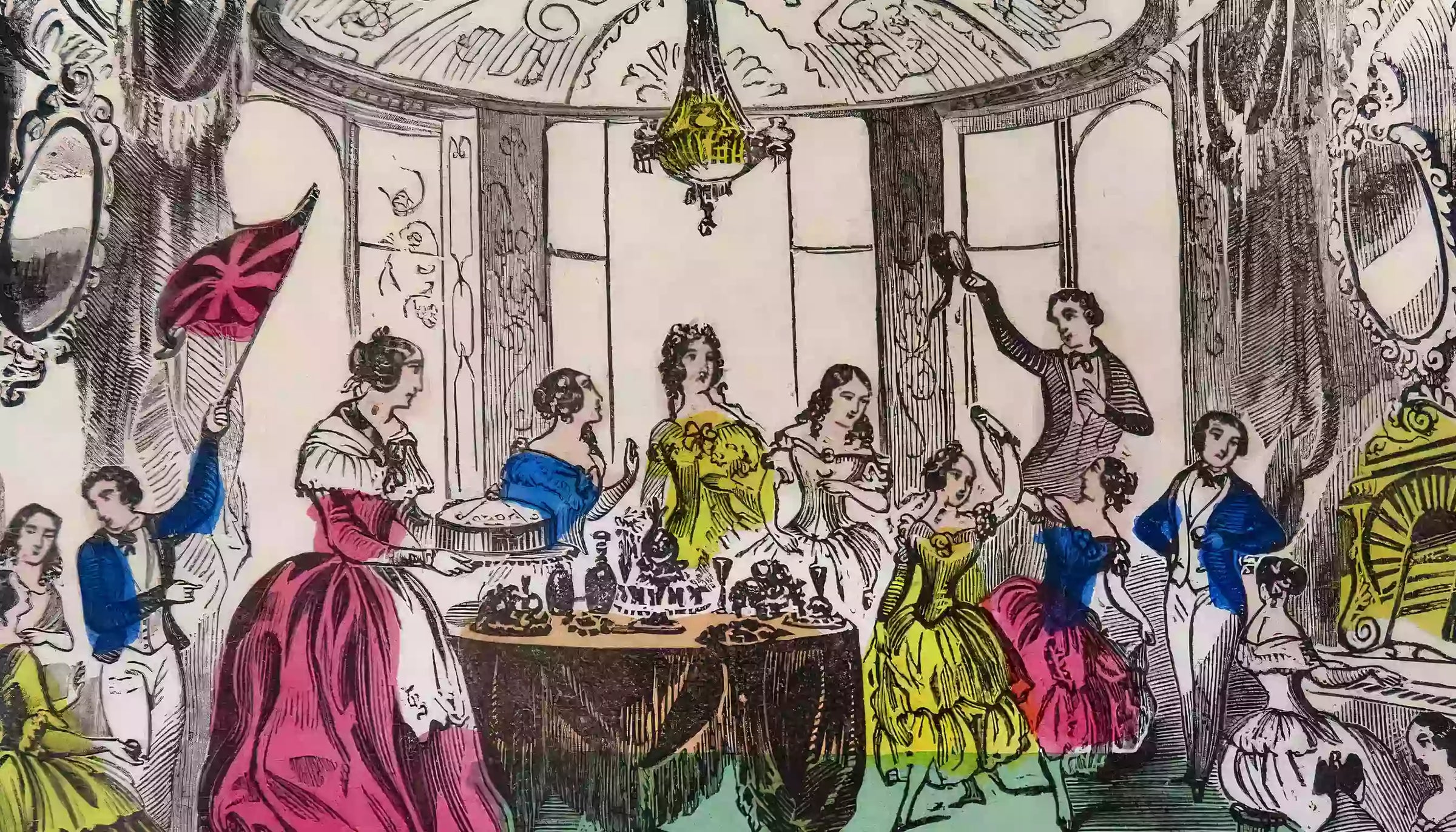
English Heritage’s records from Osborne give us something much firmer. Queen Victoria and Prince Albert celebrated birthdays there, and the royal children used the Swiss Cottage kitchen to make birthday cakes for each other. That does not mean Victoria invented birthday cake; it does show that birthday cake was an established part of family celebration in mid-19th-century Britain.
See English Heritage’s Royal Cooking Lessons in the Swiss Cottage and Birthdays at Osborne.
The modern cake emerged gradually
During the 19th and early 20th centuries, improved ovens, commercial baking ingredients, specialist confectionery and a growing retail bakery trade made decorated cakes more practical for far more households. It is safer to describe that as a gradual change than to claim one inventor or one moment “democratised” birthday cake for everybody.
The Library of Congress visual archive includes a 1914 image simply titled “The birthday cake”, useful evidence that cake-and-candle imagery was well established by the early 20th century.
Candles are a related tradition, not the cake’s birth certificate
Candles, wishes and the number-of-years ritual have their own complicated history. German birthday customs are important to later European practice, but claims about evil spirits, Artemis or a single uninterrupted tradition should be labelled carefully unless the source supports them.
What changed in the 20th and 21st centuries
The biggest transformation is not mystical; it is practical. Better baking equipment, refrigeration, transport, photography, printed decoration and online ordering made cakes easier to customise and easier to share visually. Social media accelerated particular styles — drip cakes, vintage piping, comic cakes, burn-away reveals — without changing the basic social job of a birthday cake: marking a person and a moment.
A birthday cake is still a shared object
There is no need to invent universal symbolism for every country. The enduring pattern is simpler: a cake is brought out, often decorated for one person, and shared with other people. The design changes with taste, budget, culture and technology.
That is also how we approach our current birthday cakes: not as descendants of one ancient sacred recipe, but as modern celebration cakes made for a particular person, date and table.
Sources used for this revision
- English Heritage — Royal Cooking Lessons in the Swiss Cottage
- English Heritage — Birthdays at Osborne
- Library of Congress — Birthdays collection
History is more interesting when we admit where the evidence stops.
Love,
Reshmi xoxo
Comments