
[Updated 15/09/2026]
When bakers talk about French or Italian macarons, they are usually talking about the meringue method, not the nationality of the finished biscuit. Both methods can produce excellent shells. At Anges de Sucre we have long used Italian meringue because the hot-syrup method gives us a stable, repeatable base.
If you are troubleshooting temperamental shells, our archive guide explains why French macarons can be difficult to make.
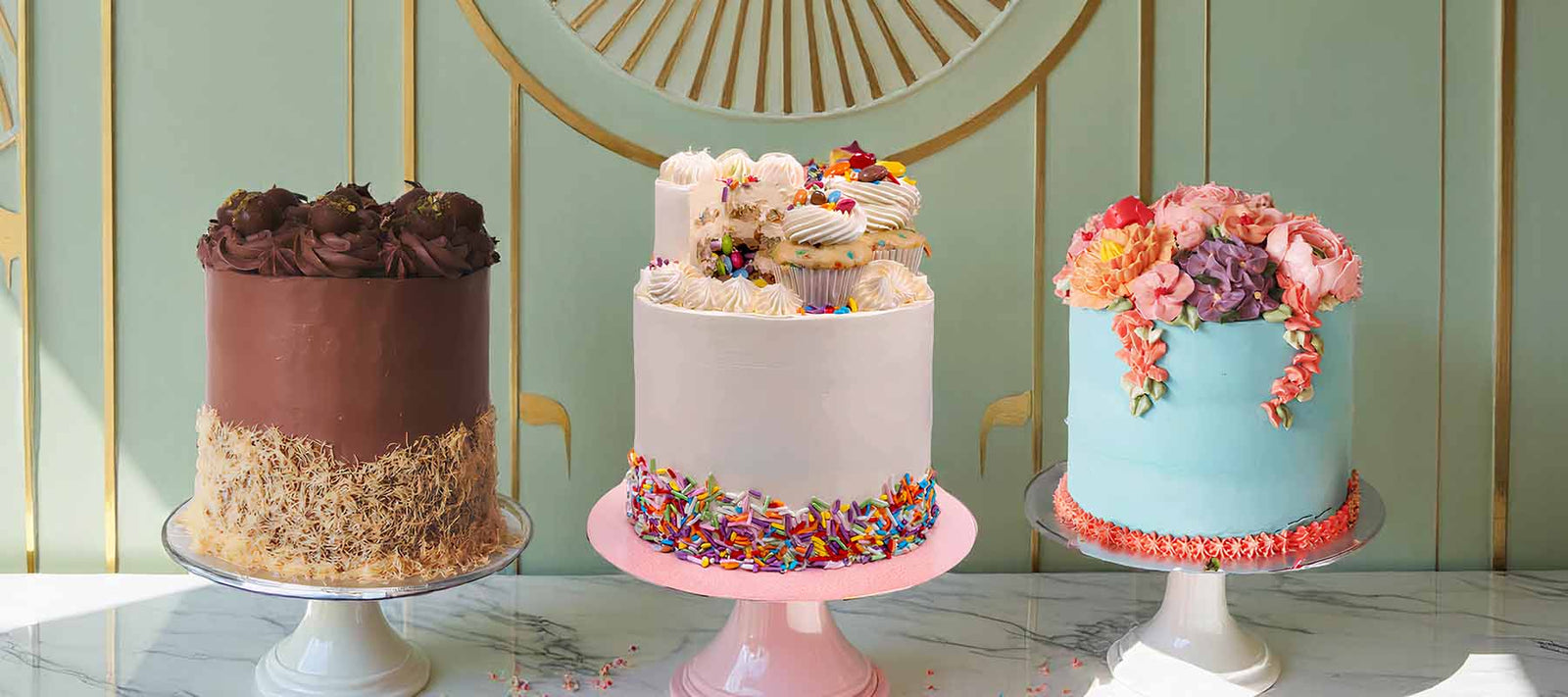
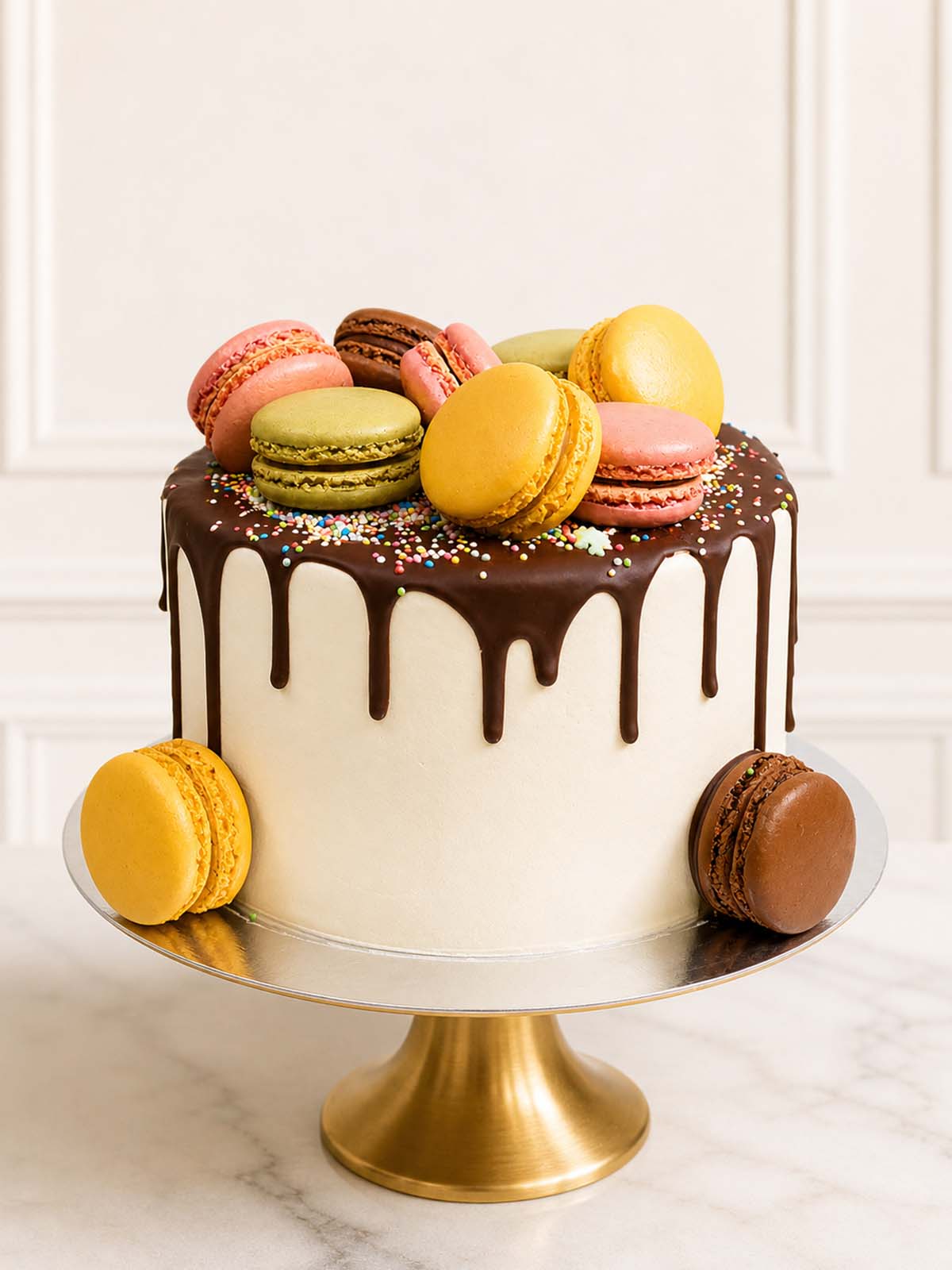
For finished celebration designs, browse our macaron cakes.
French vs Italian meringue
French meringue is made by whisking egg whites and gradually adding dry sugar. It is direct and requires no sugar syrup.
Italian meringue is made by pouring a hot sugar syrup into whisking egg whites. In our macaron method the syrup is taken to 118°C before it is added in a thin stream. The resulting meringue is often more stable during folding, although it is not automatically “better” and it does not remove the need for careful macaronage and oven control.

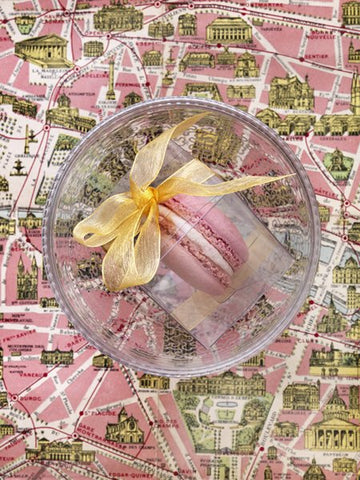
Photography: Anneli Marinovich
What about Catherine de’ Medici?
The familiar story that Catherine de’ Medici brought macarons and Italian pastry chefs to France in 1533 is best treated as culinary folklore rather than established history. Almond biscuits developed in several European traditions, and there is no single documented moment that explains the modern macaron. The filled Parisian-style macaron evolved much later.
Why we use Italian meringue
Macaron shells are sensitive to several variables at once: meringue strength, the fineness and moisture of the dry ingredients, how far the batter is folded, piping consistency, resting conditions and the behaviour of the oven. Italian meringue gives us one comparatively stable part of that system.
Equipment that genuinely helps
- Digital scales: weigh every ingredient rather than relying on volume measures.
- Fine sieve: removes coarse almond pieces and helps create a smoother dry mix. Sifting is useful for texture; it is not primarily about “adding air”.
- Reliable thermometer: use a probe or sugar thermometer rated for the required temperature and verify the syrup reaches 118°C.
- Clean mixer bowl and whisk: grease can interfere with a stable meringue. The bowl does not need to be ceramic; stainless steel works very well.
- Piping bag and round nozzle: consistent pressure and a vertical piping position matter more than an unusually large nozzle.
- Flat baking trays: trays that heat evenly make results easier to repeat.
Basic Italian-meringue sequence
- Sift the ground almonds and icing sugar and combine them with the first measured portion of egg white.
- Begin whisking the second portion of egg white.
- Heat the sugar and water to 118°C.
- With the mixer running, pour the syrup in a thin stream down the side of the bowl, avoiding the whisk.
- Whisk to a glossy, firm meringue.
- Fold the meringue into the almond paste until the batter flows in a thick ribbon and slowly levels.
- Pipe consistently, remove large bubbles and follow the resting and baking conditions of the tested recipe you are using.
If you prefer to start with a French-meringue method, use our French-meringue macaron recipe. Neither method is foolproof in every kitchen, so record your oven setting, tray, room conditions and result when dialling in a recipe.
Happy baking,
Reshmi xoxo

can i make italian macarons with french meringue?
This was so helpful! Thank you*
Hi! Thank you for these tips! I can’t get the recipe open, the link doesn’t work!
Thanks for the tips. How do I get the recipe the link doesn’t seem to be working. Thank you
Keep up the fantastic piece of work, I read few content on this site and I believe that your blog is very interesting and has sets of superb info.